
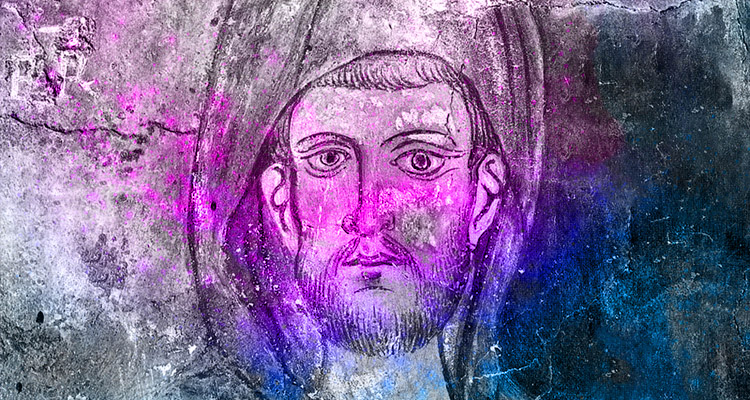
Introduction:
St. Francis of Assisi was born in Assisi, Italy in the year 1182. He is one of the most important figures in the history of Christianity. It transcended thanks to its achievements, history and personality. Since he was the founder of the Franciscan Order and led a movement of renewal within the Catholic religion. This movement was based on love for God, fraternity among brothers and poverty. This had special repercussion among the popular classes and thanks to its achievements was one of the most venerated figures in the Middle Ages.
Story:
He was the son of a prosperous merchant named Pietro di Bernardone. It belonged to a family of the bourgeoisie and therefore was born in wealth. It was common at the time that the children worked in the same profession as their father and therefore from a young age, Francisco helped his father in the trade thus showing his intelligence and his ability in this area.
In relation to its context, the city was in conflict to claim its autonomy of the Holy Empire. With the support of the nobles of Assisi, in 1201 they began a war against Perusa in which Francisco participated. Because of this fact, in 1202 he was imprisoned for a year.
It is said that in front of a trip to Apulia he heard a voice that indicated that it should return to Assisi. Since then he began to take another stance in the underworld and was deeply linked with poverty. He was in community with the poor and the sick, thus renouncing their earthly goods. In turn, he participated in the reconstruction of the chapel of St. Damian since he received a divine message where he was told that it should be part of his repair.
But this new way of life was not well received by his father, who was worried about the loss of his patrimony. Neither by his friends who rejected him, judging him crazy. His father chained him in a dungeon from which his mother ended up freeing him. His father responded to this fact by going to the civil authorities, but Francisco refused, saying that he was not part of it. The matter remained in the hands of ecclesial authority where Francis proclaimed God as his true Father and, consequently, the bishop accepted him in arms.
In 1210, Pope Innocent III approved his model of life based on simplicity and love of God, granting him permission to preach. Thus its adherents were increasing and formed what is known as the Franciscan Order. He also founded the female branch of the Order known as The Poor Clares. As early as 1215, the order spread to Spain, Italy and France. In turn, the Lateran Council acquired the legal status necessary to recognize the order canonically.
In 1219, he traveled to the East to preach his message, where he warned the soldiers of the crusades not to make any attack, since he had received a message from God. These made fun of him and in the next battle, was a great loss for the soldiers of the crusades. Many of them left their posts to become smaller friars.
In 1221, the well-known Third Order, which allowed men and women to live under the word of the Gospel and Francis as a preacher, obtained its legal status. In 1223 a second version of it was written. Thanks to this, the Franciscan order passed to members such as Brother Elias and Cardinal Ugolino, future Pope Gregory IX. This was how St. Francis lived in retreat and peace. During this period he devoted himself to prayer and isolation. He prayed to receive the Passion of Jesus, which was granted by receiving the signs of crucifixion. He spent his last two years in Assisi under the care of his friends. He died on October 3, 1226.
Simple Prayer of San Francisco:
Lord, make me an instrument of your peace:
where there is hatred, I put love,
where there is an offense, let me forgive,
where there is discord, put union,
where there is error, put truth,
where there is doubt, put faith,
where there is despair, put hope,
where there is darkness, let me light,
where there is sadness, let me joy.
Oh Master, may I not seek so much
be consoled as to comfort,
be understood as understanding,
be loved as love.
Because giving is to receive,
Forgetting is to found,
Forgiving is forgiven,
And dying is raised to eternal life.


